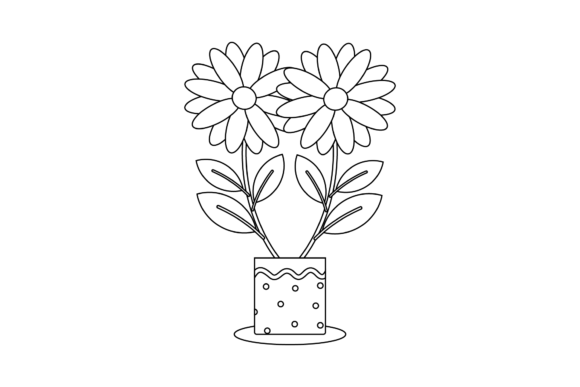
Floral Simple Collection Outline
A Designer’s First Glance: Clean, Calm, and Craft-Ready
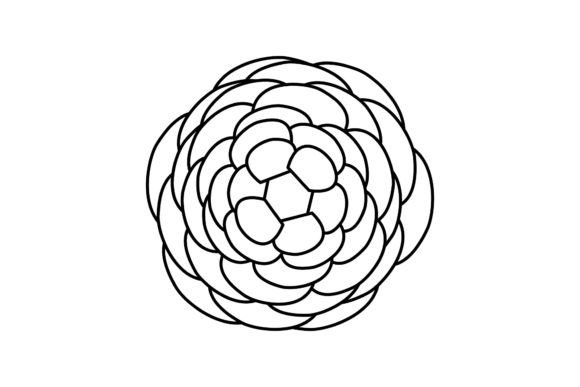
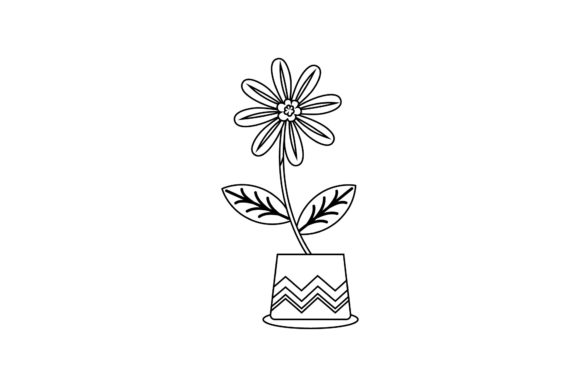
Opening Floral Simple Collection Outline feels like unrolling a quiet sketchbook page — no fuss, no clutter. It’s not a dense bouquet or a botanical illustration; it’s six delicate floral outlines, each drawn with consistent line weight and gentle curvature. The mood is soft but intentional: modern minimalism meets handmade warmth. As an embroidery designer who’s stitched everything from intricate monograms to chaotic festival patches, I immediately sensed its purpose — this isn’t for statement sleeves or showstopper quilts. It’s for the quiet moments: a linen tea towel folded neatly on a boutique shelf, a baby onesie with one small bloom at the chest, or the subtle corner detail on a hand-stitched pillow cover.
Where It Shines: Real Projects, Not Just Pixels
I tested Floral Simple Collection Outline across three real-life scenarios: a cotton tote bag for a local florist’s pop-up, a set of organic-cotton baby burp cloths, and a limited-run batch of unisex sweatshirts for a small craft business. In every case, the design held up — not because it’s flashy, but because its simplicity translates cleanly into stitch.
- Custom apparel: On midweight cotton sweatshirts, the outline translated beautifully using a narrow satin stitch (0.8mm width). No fill stitch needed — just clean, confident lines that read clearly even at 3.5" wide.
- Embroidered patch: When digitized as a standalone patch (with merrow border), the shapes stayed crisp and balanced. No tiny loops collapsed, no stems disappeared — a win for anyone selling ready-to-iron accessories.
- Personalized gift: For a bridal shower kitchen towel set, I placed one motif in the lower right corner. Customers commented on how “thoughtful” and “unfussy” it felt — exactly the tone handmade gifts need to land emotionally.
Where to Pause — Not Every Fabric or Fit Is Equal
This isn’t a one-size-fits-all embroidery file. Its strength is also its limitation: it relies entirely on line integrity. That means thoughtful execution matters more than with denser designs.
Use caution on:
- Stretchy fabric — like jersey or ribbed knits — unless you’re using cutaway stabilizer and reducing stitch speed. Thin outlines can waver or blur without firm backing.
- Textured fabrics — such as terry cloth or heavy linen — where thread may catch or skip over raised surfaces. A test run on scrap is non-negotiable here.
- Curved surfaces — especially caps or curved apron pockets. The linear flow works best on flat or gently contoured areas. Avoid placing stems or petals directly over seams or deep darts.
- Dark fabric with light thread — while elegant, fine outlines can visually recede. Consider slightly increasing stitch width (to 1.0–1.2mm) or adding a single underlay for definition.
Why It Builds Trust — For You and Your Buyers
As an Etsy seller and small shop owner myself, I know customers don’t just buy stitches — they buy intention. Floral Simple Collection Outline reads as curated, not automated. That matters. When someone sees this on a handmade apron or a holiday gift tag, they sense care — not just decoration. It supports brand consistency for makers who value subtlety over saturation: think neutral palettes, natural fibers, and slow-made ethos.
It also earns repeat engagement. Unlike busy graphics that overwhelm, this collection invites pairing — a single bloom beside a handwritten name, two stems framing a short quote, or scattered outlines across a picnic blanket. That versatility boosts perceived value without demanding complex digitizing skills.
Practical Notes from My Hoop to Yours
Before stitching your first Floral Simple Collection Outline project, here’s what I’d do — based on actual runs, not theory:
- Test on scrap fabric — same type, same stabilizer, same thread. Watch how corners hold and whether thin stems pull.
- Check thread color contrast early. This design lives or dies by readability. Try it in black, oat, and sage on both light and dark mockups.
- Review stitch density — since it’s outline-only, density isn’t high, but confirm your digitizer didn’t auto-add unnecessary underlay. Less is more here.
- Confirm hoop size compatibility. At 1920px × 1280px canvas size, the files scale well — but always verify your largest motif fits comfortably within your machine’s max hoop dimensions before finalizing placement.
- Inspect small details — especially where stems meet blossoms. Some vector exports can introduce micro-gaps or overlapping paths that confuse embroidery software.
- Use proper stabilizer: Tear-away for stable wovens, cutaway for knits or lightweight silks. Skip fusible web unless you’re doing applique — this is an outline, not a shape to layer.
- Verify licensing before selling finished items or reselling digital files. The product listing confirms format types (AI, EPS, SVG, DXF), but commercial use rights aren’t stated — check with the creator if scaling for craft fair inventory or wholesale.
Final Thought: Simplicity With Substance
Floral Simple Collection Outline won’t shout from a crowded Etsy homepage — and that’s its superpower. It’s the kind of machine embroidery design that elevates a handmade product without competing with it. It suits small shop products, personalized gifts, and commercial embroidery projects where clarity, calm, and craftsmanship are the message. As a designer who’s passed on dozens of “cute” icons for being too fragile or generic, I kept this one open in my assets folder. Not because it’s perfect — but because it’s honest, usable, and quietly confident. And in the world of digital embroidery files, that’s rare enough to stitch with intention.